
Fayette County Divorce Records
Fayette County divorce records are filed with the Circuit Court Clerk in Connersville and cover all dissolution of marriage cases handled in this east-central Indiana county. You can search records online or visit the courthouse to request copies of filed documents.
Fayette County Quick Facts
Fayette County Clerk of Courts
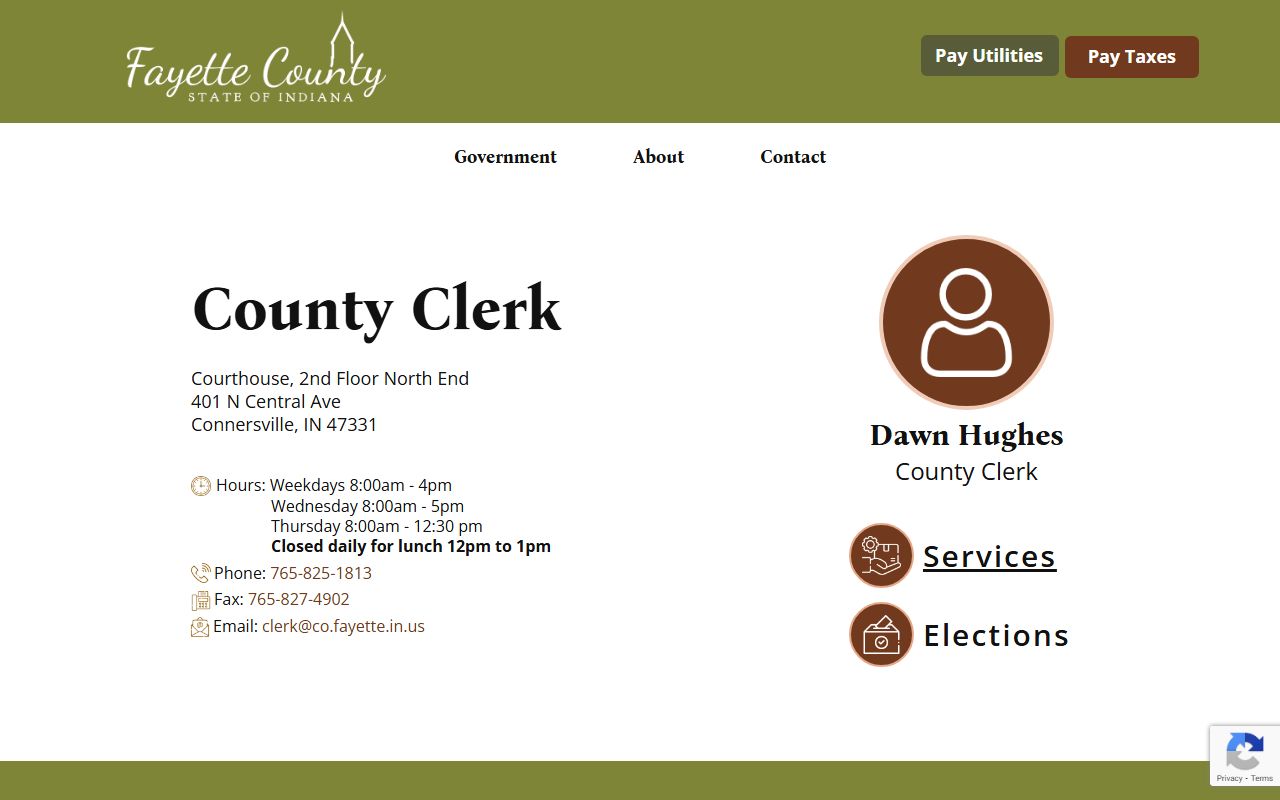
Dawn Hughes serves as the Fayette County Clerk. Her office is the official keeper of all court records in the county, which includes divorce and dissolution of marriage filings. The clerk's office handles new case filings, certified copy requests, and payments for court fees.
You can reach the Fayette County Clerk at:
- Address: 401 N. Central Ave, Connersville, IN 47331
- Phone: 765-825-1813
When you visit, bring a photo ID. Know the full name of at least one party and, if possible, the approximate year the case was filed. That will help staff locate the record quickly. Certified copies cost more than plain copies, so decide in advance what you need.
How to Search Fayette County Divorce Records Online
Indiana's statewide case management system, MyCase, gives free public access to court records from across the state, including Fayette County. You can search by party name, case number, or attorney. Most divorce filings from recent years are available there. Older cases may only exist as paper records at the courthouse.
To use MyCase, go to the site and enter a name in the search box. Results show case type, filing date, and current status. You can view docket entries and some documents without making an account. If you need certified copies, you must contact the clerk's office directly -- online access does not give you certified documents.
The Indiana Courts public records page at in.gov/courts/public-records explains the request process and what fees apply. Fayette County follows the same process as other Indiana counties.
Filing for Divorce in Fayette County
To file for divorce in Fayette County, at least one spouse must have lived in Indiana for six months and in Fayette County for at least three months before filing. This is set out in Indiana Code 31-15-2-6. You file your petition at the Circuit Court Clerk's office on Central Ave in Connersville.
Indiana requires a 60-day waiting period between when the petition is filed and when the court can finalize the divorce. This comes from IC 31-15-2-10. The court will not issue a final decree before those 60 days pass, even if both sides agree on everything right away. The wait gives parties time to work out terms or reconsider.
Filing fees in Fayette County run up to $177 for a standard dissolution case. If you have a low income, you may qualify for a fee waiver. Ask the clerk's office about the waiver form when you arrive. Legal aid organizations can also help if cost is a barrier.
What Fayette County Divorce Records Contain
A divorce record in Fayette County includes several documents. The original petition starts the case. After that, the file may grow to include financial disclosures, parenting plans, property settlement agreements, and eventually the final decree signed by the judge.
The final decree is the key document. It says the marriage is dissolved and sets out the terms -- who gets what, who pays what, and how custody and support are handled if children are involved. Lenders, employers, and government agencies often want a certified copy of this decree as proof of marital status.
Some parts of divorce files may be sealed by court order, especially records involving minors. Most adult-only divorce records are open to the public under Indiana's Access to Public Records Act, IC 5-14-3.
Copy Fees and Record Request Process
Plain copies of divorce records cost $1.00 per page at the Fayette County Clerk's office. Certified copies carry an extra charge -- typically $3 to $5 above the per-page rate. Call ahead at 765-825-1813 to confirm current fees before you visit.
You can request copies in person at 401 N. Central Ave, Connersville. Some counties also accept written requests by mail, with payment enclosed. Ask the clerk about mail requests if you cannot visit in person. Processing time varies depending on how busy the office is and how old the case is.
For cases that go back several decades, the physical file may be in storage. The clerk may need extra time to pull it. Call ahead and give as much detail as you can about the case to speed things up.
Fayette County Court Records and Indiana APRA
Indiana's Access to Public Records Act (APRA), found at IC 5-14-3, gives the public the right to inspect and copy most government records. Court records fall under this law with some limits. A divorce file is generally public unless a judge has sealed part or all of it.
If you are denied access to a record, you can appeal to the Indiana Public Access Counselor. That office reviews disputes between requesters and agencies. The Indiana Courts records request page has more detail on your rights and how the process works.
Fayette County Court Resources
The Indiana Courts directory at in.gov/courts/directory lists contact info for every county in the state, including Fayette. If you are not sure which court handled a case, that page can help you figure it out.
For free legal help, Indiana Legal Help connects residents with legal aid services statewide. If you cannot afford a lawyer for your divorce, this is a good starting point. The site has guides on how to file without an attorney and what forms you need.
The Indiana State Bar Association also has a referral service if you need a private attorney. Family law attorneys in and near Fayette County can help with contested divorces, custody disputes, and complex property matters.
The Indiana Courts have published a local court resource page for Fayette County. You can view details and check for any county-specific procedures there.
This page lists the courts operating in Fayette County and links to local court information that may help when you need to locate a specific case or filing.
Indiana Divorce Laws That Apply in Fayette County
Indiana Code Title 31 governs all family law matters in the state, including divorce. The key article is IC 31-15, which covers dissolution of marriage. It sets out grounds for divorce, residency requirements, the 60-day waiting period, property division rules, and more.
Indiana is a no-fault divorce state. Either spouse can file based on an "irretrievable breakdown" of the marriage without having to prove fault. That said, fault can sometimes affect property division or custody decisions at the judge's discretion.
Property division follows an "equal division" presumption under IC 31-15-7-5. Courts start from the idea that marital assets and debts should be split equally. Either party can present evidence for a different split, and courts have broad authority to deviate from the 50-50 default when it is fair to do so.
You can read the full text of Indiana's divorce statutes at the Indiana General Assembly website: iga.in.gov/legislative/laws/2023/ic/titles/31. The site is free to use and has the current version of the law.